
A DPF differential pressure sensor reads the pressure difference across the filter. A downstream particulate matter (PM) sensor helps the controller monitor filter performance by detecting particles that reach the sensor. Identify which signal the fault refers to before ordering parts.
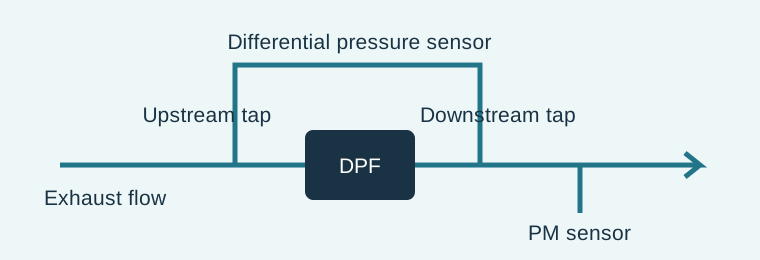
What each sensor measures
| Sensor | Measurement | How the controller uses it |
|---|---|---|
| DPF differential pressure | Pressure upstream minus pressure downstream | Helps assess filter loading and manage regeneration |
| Downstream PM | Particle deposition on the sensing element in Bosch's resistive design | Helps evaluate whether the filter is trapping particles effectively |
Bosch describes a piezoresistive element in its differential pressure sensor. The pressure reading is interpreted by software. Since pressure drop depends on flow as well as restriction, compare readings at the operating condition specified by the vehicle manufacturer. A single reading without operating context cannot establish filter loading. Bosch differential pressure sensor
Two different kinds of regeneration
DPF regeneration targets soot accumulated in the filter. In Bosch's resistive PM design, the sensor element is also heated to remove deposits from its electrodes before a measurement phase. The component being heated and the purpose of the heating are different. Bosch particulate matter sensor
What to check before replacing a part
- Record the exact fault code, its description and the conditions under which it set.
- For a pressure signal complaint, identify both pressure taps and confirm hose routing and condition against the service information. A disconnected or obstructed hose can change the pressure that reaches the sensor.
- For a PM fault, use the vehicle procedure to distinguish a sensor or circuit fault from a filter performance fault. Record the complete part reference and confirm its application before ordering.
Can a pressure sensor also be used for EGR?
Bosch describes a related sensor variant for low-pressure exhaust gas recirculation. Measuring range and connection geometry can differ by application. Confirm the reference and function before selecting a replacement. Bosch differential pressure sensor
BG catalogue and sources
- BG particulate matter sensors for downstream PM parts.
- BG part-number directory to search by the complete reference.
- Bosch differential pressure sensor for pressure measurement and regeneration control.
- Bosch particulate matter sensor for the downstream resistive sensing design.
Sources checked 16 November 2026.